

4 Infection Prevention Tips Every Family Caregiver Should Know

Caring for a parent, spouse, or loved one at home can mean taking on responsibilities you never expected. Changing dressings, helping someone who's sick, cleaning up after an accident, and keeping medical supplies organized can all become part of everyday life.
But unlike a hospital or medical facility, your home probably doesn't have a supply room or an infection prevention specialist nearby.
The good news is that some of the most important infection prevention habits are also the simplest.
In recognition of International Infection Prevention Week, October 19–25, 2026, we're sharing four practical ways to help reduce the spread of germs while caring for someone at home.
Why infection prevention matters
Every October, the Association for Professionals in Infection Control and Epidemiology (APIC) leads International Infection Prevention Week.
This year's theme, "Generations of Infection Prevention: Past. Present. Protected.", highlights how infection prevention has evolved over centuries.
Today, healthcare professionals have access to sophisticated technology, advanced testing, and specialized equipment. But some of the most effective preventive practices remain surprisingly simple.
Clean hands, appropriate glove use, safe sharps disposal, and properly stored wound-care supplies can all make a difference at home.
1. Handwashing: Still one of the most important habits
Here's a bit of medical history you might not know.
In 1847, Dr. Ignaz Semmelweis was working in a maternity clinic in Vienna. He noticed that significantly more mothers were dying from childbed fever in the ward staffed by doctors and medical students than in the ward run by midwives.
Semmelweis suspected something was being carried on the hands of the people treating patients.
He introduced a requirement that medical staff clean their hands with a chlorine solution before examining patients. Maternal deaths dropped dramatically.
His discovery wasn't widely accepted at the time, but today hand hygiene is one of the foundations of infection prevention.
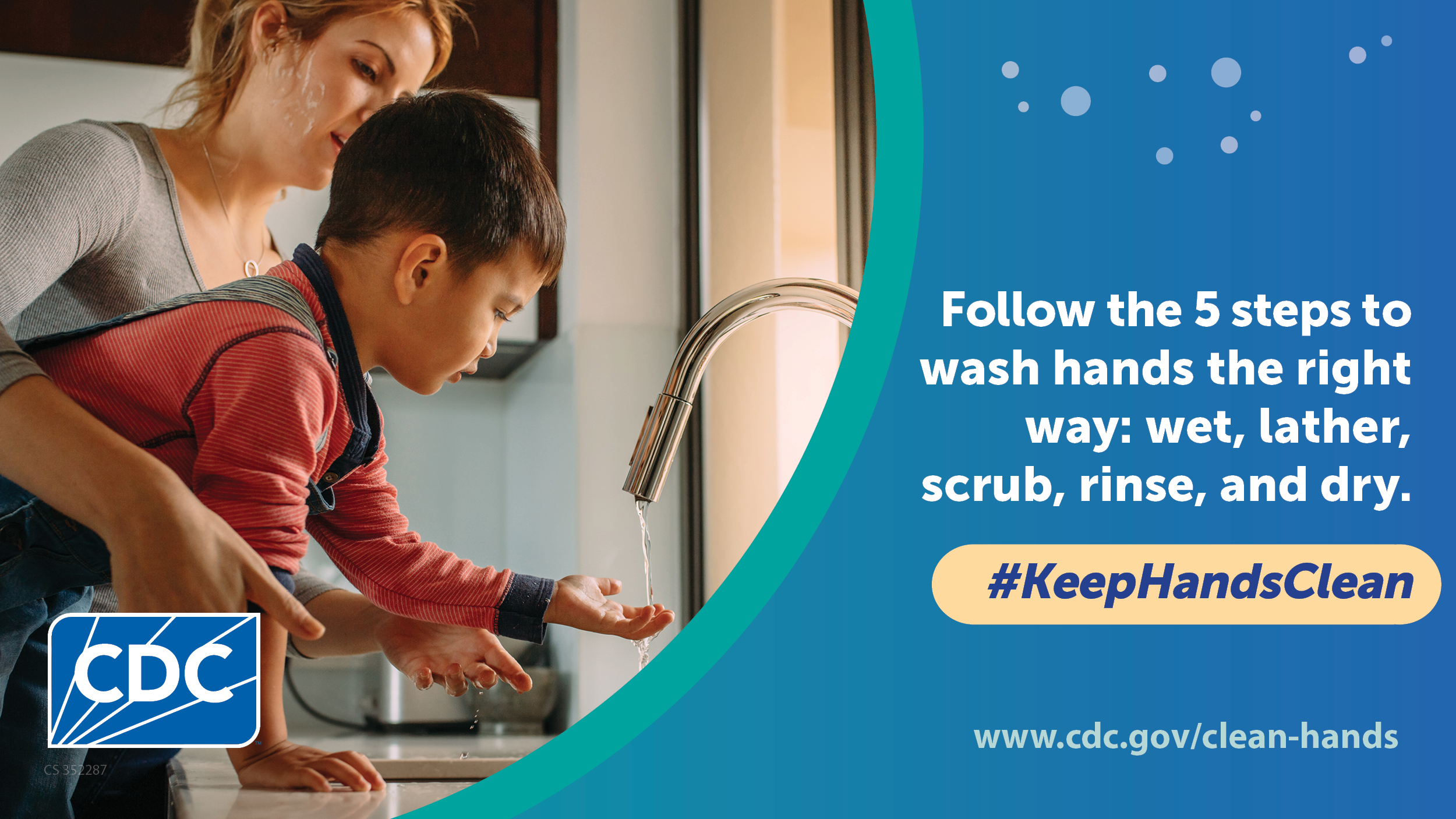
Handwashing reminder from the CDC.
How to wash your hands properly
The Centers for Disease Control and Prevention (CDC) recommends five steps:
- Wet: Wet your hands with clean, running water and apply soap.
- Lather: Rub your hands together, including the backs of your hands, between your fingers, and under your nails.
- Scrub: Continue scrubbing for at least 20 seconds. Humming "Happy Birthday" twice is an easy way to remember the timing.
- Rinse: Rinse thoroughly under clean, running water.
- Dry: Use a clean towel or an air dryer.
When should caregivers wash their hands?
Some particularly important times include:
- Before and after treating a cut or wound
- Before preparing food or helping someone eat
- After assisting someone with toileting or personal hygiene
- Before and after caring for someone who is sick with vomiting or diarrhea
- After blowing your nose, coughing, or sneezing
- After removing disposable gloves
- After handling garbage or other potentially contaminated materials
When soap and water aren't available, the CDC recommends an alcohol-based hand sanitizer containing at least 60% alcohol. However, soap and water are generally the better choice when hands are visibly dirty or greasy.
The takeaway: Clean hands protect both the person receiving care and the person providing it.
2. Disposable gloves help, but they don't replace clean hands
Disposable gloves are useful when handling soiled materials or performing tasks that may involve contact with blood or other bodily fluids.
But there's one important rule that's easy to forget: Wearing gloves does not replace washing your hands.
The CDC recommends cleaning your hands before putting on gloves when the task requires them, and again immediately after removing them.
Gloves can become contaminated while you're working. Touching a phone, cabinet handle, or other clean surface with contaminated gloves can transfer germs.
How to remove disposable gloves safely
The outside of used gloves may be contaminated, so removing them carefully matters.
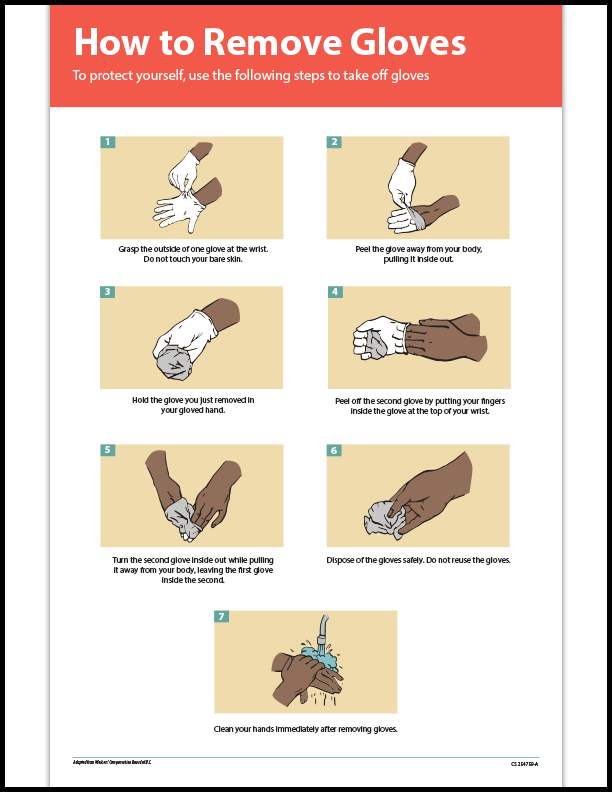
Illustrated glove removal instructions from the CDC.
- Grasp the outside of one glove near your wrist without touching your skin.
- Peel the glove away from your hand, turning it inside out.
- Hold the removed glove in your still-gloved hand.
- Slide the fingers of your bare hand underneath the wrist of the second glove.
- Peel the second glove off, turning it inside out around the first glove.
- Dispose of both gloves. Do not wash or reuse disposable examination gloves.
- Clean your hands immediately.
Change gloves when they become torn or contaminated, and between tasks when necessary to avoid spreading germs. Follow your healthcare provider's instructions about the type of gloves needed for specific wound-care procedures.
Choosing gloves for home care
For routine tasks that call for nonsterile examination gloves, GoBioMed carries StarMed Plus Nitrile Exam Gloves.
These powder-free, latex-free examination gloves are available in sizes Small through X-Large. Small, Medium, and Large contain 300 gloves per box, while X-Large contains 250.
Whether you're helping a family member at home or caring for patients professionally, having appropriate gloves available when needed can make everyday tasks easier to manage.
3. Dispose of used needles and sharps safely
If someone in your household uses injectable medications, insulin needles, lancets, or other medical sharps, safe disposal is essential.
A used needle left on a counter or thrown loosely into the trash can injure family members, visitors, pets, or waste collection workers.
The U.S. Food and Drug Administration (FDA) recommends placing used needles and other sharps into an appropriate sharps disposal container immediately after use.
Two important steps for safe sharps disposal
Step 1: Use an appropriate sharps container.
The FDA recommends an FDA-cleared sharps disposal container when possible. These containers are designed to resist punctures and help prevent accidental contact with used needles and other sharp medical items.
Never place loose used needles directly into household trash or recycling.
Step 2: Don't overfill the container.
When a sharps container is approximately three-quarters full, it's time to prepare it for disposal according to the manufacturer's instructions and your community's requirements. Overfilling increases the risk of accidental needlestick injuries.
Disposal rules vary by location. Depending on your community, options may include authorized collection sites, household hazardous waste programs, mail-back services, or special pickup arrangements.
Contact your local health department or waste collection service to learn which methods are permitted where you live.
Sharps containers for home use

Dynarex 2-quart sharps container. View at GoBioMed.
GoBioMed carries Dynarex puncture-resistant sharps containers in several sizes:
- 1-Quart Dynarex Sharps Container — a compact option for smaller quantities.
- 2-Quart Dynarex Sharps Container — suitable for households needing additional capacity.
- 1-Gallon Dynarex Sharps Container — a larger option for more frequent use.
These containers have translucent lids that allow users to monitor fill levels. Always keep sharps containers upright, securely positioned, and out of reach of children and pets.
4. Keep wound-care supplies clean and ready to use
Most people have a first-aid kit somewhere in their home. But when was the last time you actually checked what's inside?
Over time, gauze gets used, bandage boxes become empty, and sterile packages can become damaged or outdated.
If you're caring for someone who needs regular dressing changes, keeping appropriate supplies available is especially important.
What should you keep on hand?
Depending on your household's needs, common wound-care and first-aid supplies include:
- Sterile gauze pads
- Adhesive bandages in assorted sizes
- Medical tape
- Rolled or stretch gauze
- Absorbent wound dressings
- Disposable examination gloves
Some households may need additional products based on their healthcare provider's recommendations.
Check your supplies regularly
Choose a date to inspect your first-aid supplies. Infection Prevention Week is a convenient annual reminder.
Look for expired products, damaged packaging, and items that need replenishing.
If a sterile dressing's packaging has been opened, torn, wet, or otherwise compromised, don't assume the dressing is still sterile.
Store supplies in a clean, dry location and follow your healthcare provider's instructions when changing dressings or caring for wounds.
An easier way to restock wound-care essentials

Everyday Wound Care Refill Bundle from GoBioMed.
For households that use wound-care supplies regularly, purchasing several products individually can become inconvenient.
GoBioMed's Everyday Wound Care Refill Bundle brings together commonly used Dynarex supplies, including sterile gauze sponges, sterile combine pads, stretch gauze, waterproof medical tape, and sterile spot bandages.
It's designed to make replenishing frequently used supplies more convenient without purchasing full institutional cases of every item.
The bundle is available with free standard shipping within the contiguous United States.
When should you contact a healthcare professional?
Good infection prevention habits are important, but they don't replace professional medical care.
Contact a healthcare professional if a wound isn't healing as expected or develops signs of infection, such as increasing redness, warmth, swelling, pain, unusual drainage, or fever.
Seek immediate medical care for serious injuries or an accidental puncture involving another person's used needle. Call 911 for a medical emergency.
If you're caring for someone after surgery or managing a chronic wound, always follow the instructions provided by their healthcare team.
Small habits can make a big difference
You don't need a hospital supply room to practice good infection prevention habits at home.
Washing your hands properly, changing gloves when needed, disposing of used sharps safely, and keeping wound-care supplies clean and ready are all practical steps.
International Infection Prevention Week is a reminder that protecting health isn't limited to hospitals and medical offices. It matters at home, too.
Sources and further reading
- International Infection Prevention Week 2026 — APIC
- About Handwashing — CDC
- Hand Hygiene and Glove Use for Healthcare Workers — CDC
- How to Remove Gloves Safely — CDC
- Best Way to Get Rid of Used Needles and Other Sharps — FDA
- Make a First Aid Kit — American Red Cross
- Ignaz Semmelweis — Encyclopaedia Britannica
This article provides general educational information and is not a substitute for individualized medical advice.
About GoBioMed
GoBioMed is a medical supply retailer based in Waterford, Michigan, serving healthcare professionals, facilities, and individuals purchasing supplies for home care.
Have a question about a product? Call us at (248) 666-0508 or visit gobiomed.com.